

Workflows built for developers
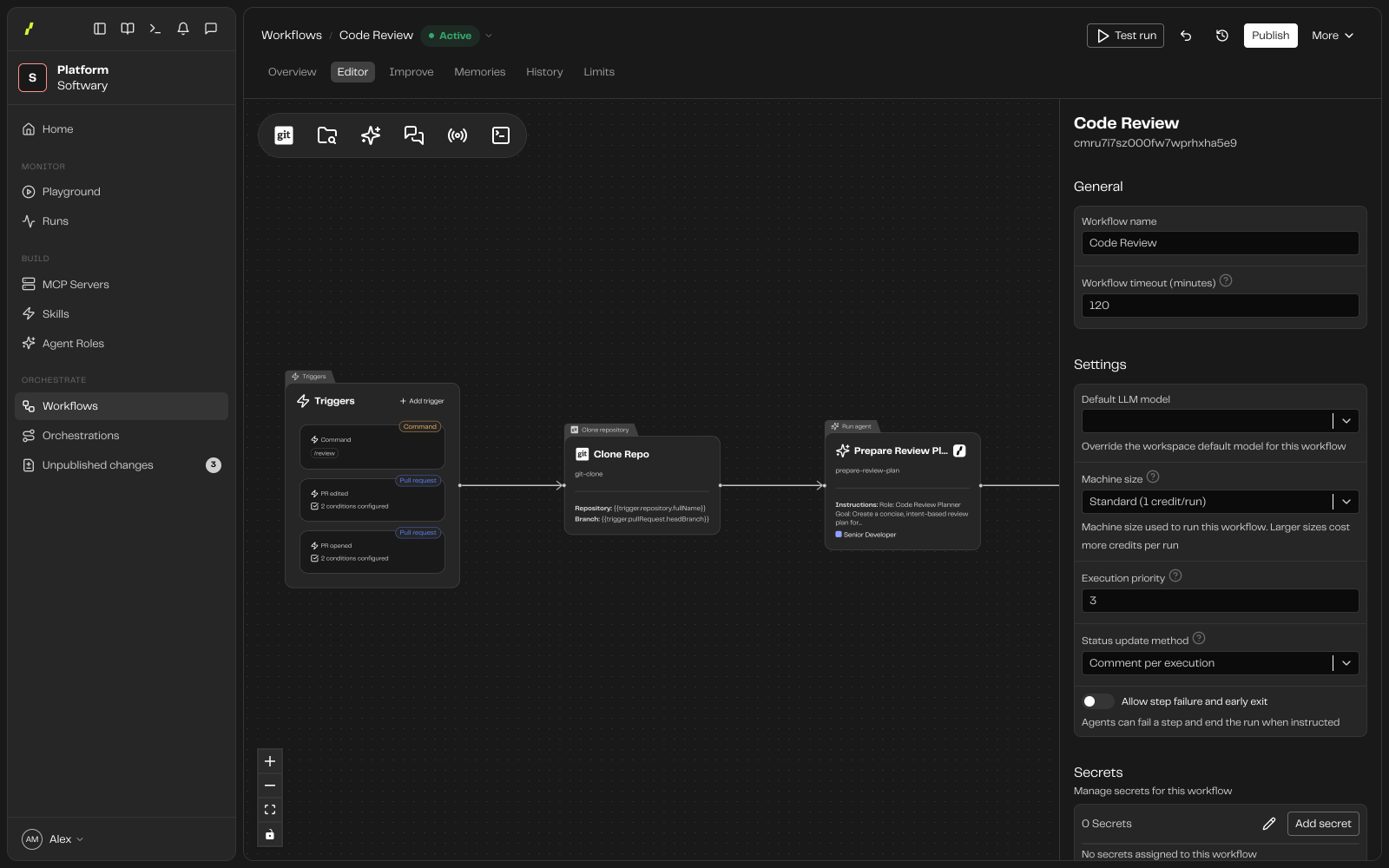
Production-grade automation rather than scripts that drift. Trigger workflows from PR creation, issue labels, slash commands, mentions, or a schedule.
Native Git and ticket integration
Act on GitHub, GitLab, Azure DevOps, Bitbucket, Jira, Linear, and ClickUp through a single normalized event model.
Enterprise-ready and secure
Managed cloud or on-prem. Your code stays in your environment, with role-based access, scoped tokens, and a full audit trail. Read the security overview.
Built-in engineering agents
Start from pre-configured agent types (Senior Developer, Code Reviewer, Tech Writer, Product Manager) or build a Custom agent with hand-picked tools. See base agents.
What you can build
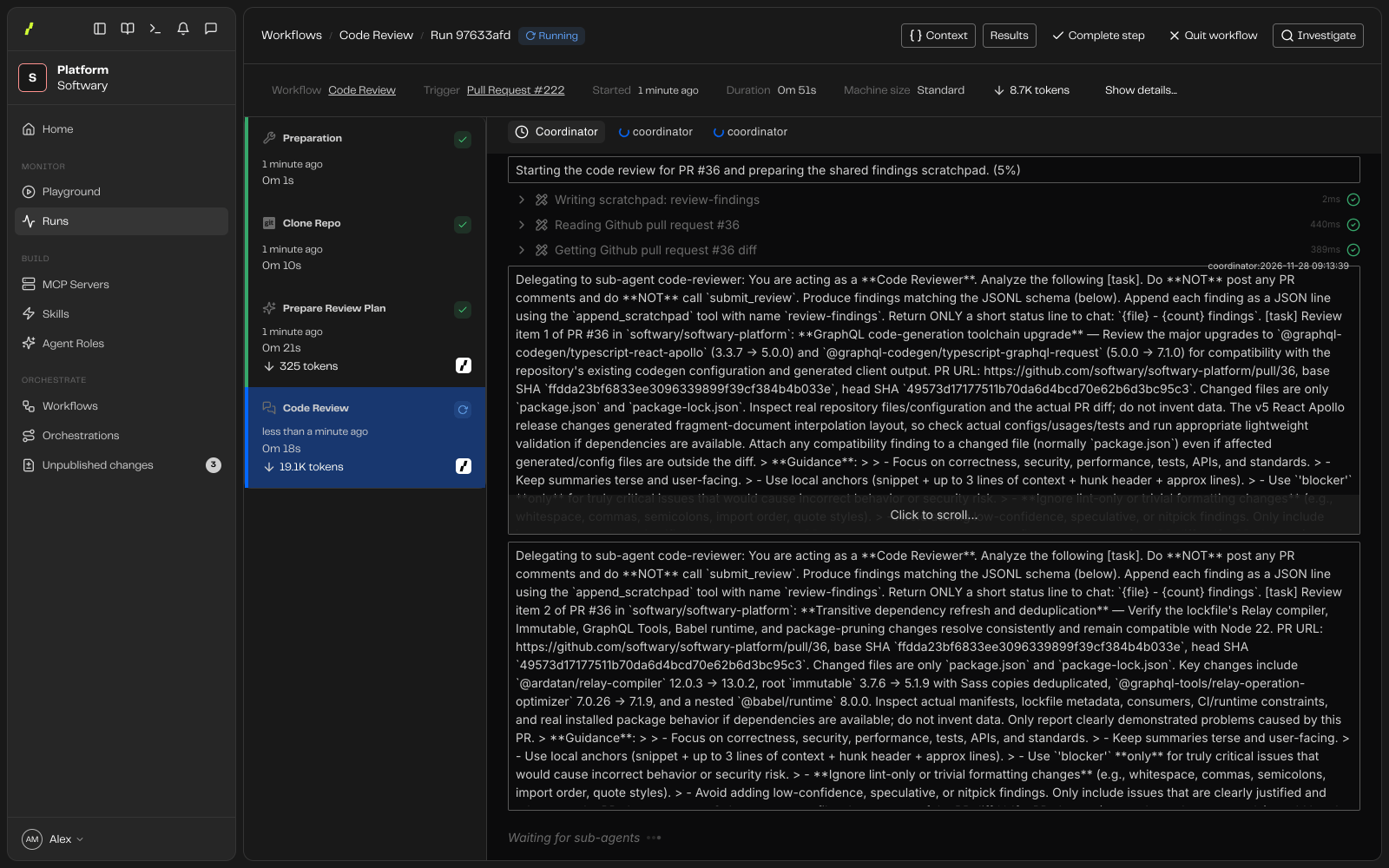
Overcut lets you build any agent that works inside your Git, tickets, or CI, connected to the rest of your ecosystem (logs, metrics, data warehouses, internal APIs). Every workflow runs with sandboxed execution, runtime governance, monitoring, and self-improvement built in.- Automated SRE: triage alerts, correlate logs and metrics, and open incident tickets with root cause analysis and a proposed fix.
- Always-current documentation: keep docs, API references, and changelogs aligned with the code as PRs merge.
- Engineering standards enforcement: hold every change to your framework versions, naming conventions, and architectural patterns.
- Security and performance governance: scan PRs for vulnerabilities, regressions, and policy violations before they reach main.
- Codebase modernization: run large-scale migrations across services, from framework upgrades to library swaps and deprecations.
Get started
Quick Start guides
Step-by-step setups for the most common automations.
Open the app
Sign in to Overcut and connect your first repository.